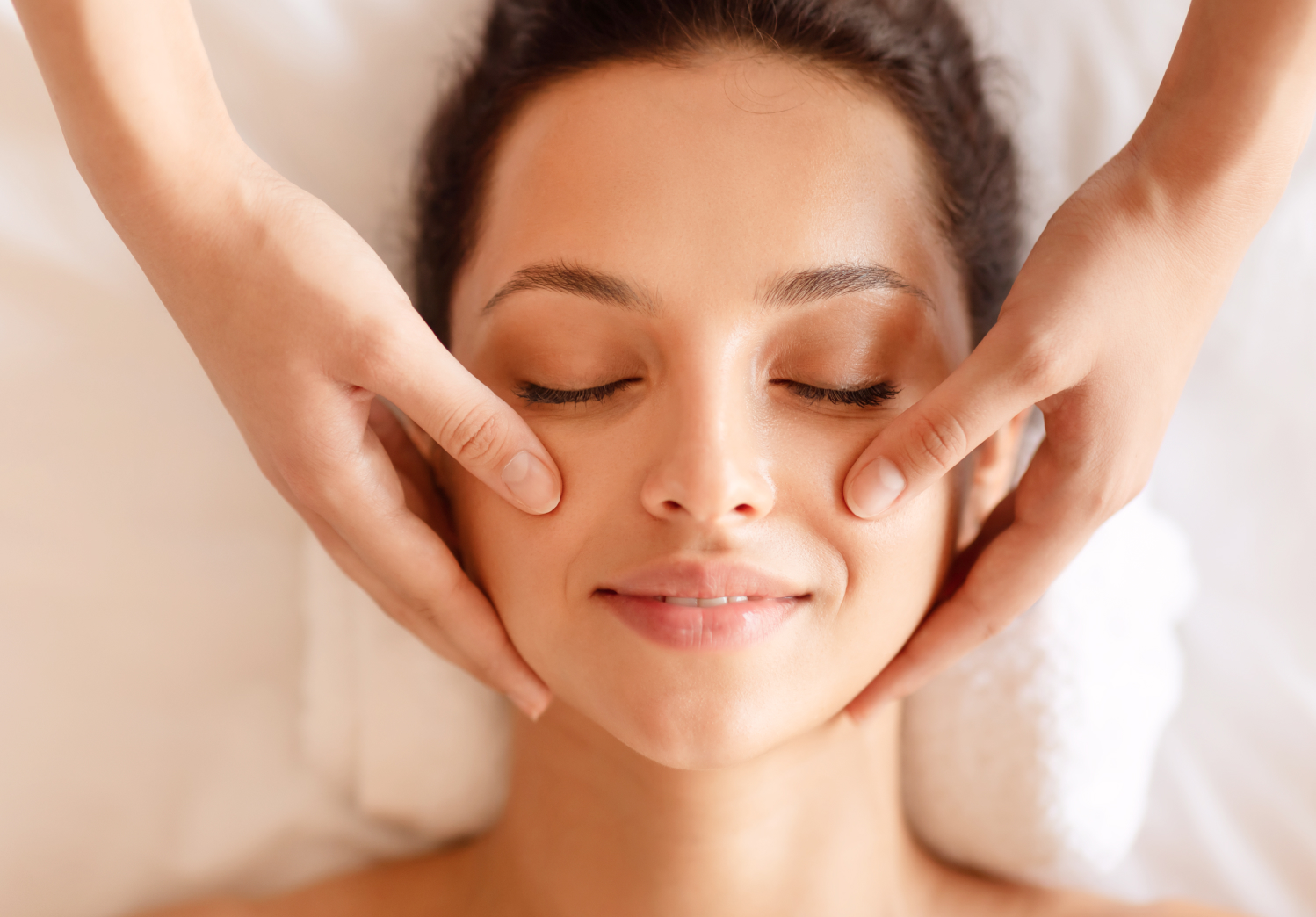
Something interesting happens at Juventas Studio that most first-time clients don’t expect. They book a facial massage for a specific reason—maybe they want to soften a tense jaw, reduce puffiness before an event, or address fine lines around their mouth. But the thing that brings them back? It’s almost never the original reason.
It’s the way they felt afterward. Lighter. Quieter inside. Like they finally stopped carrying something they didn’t realize was heavy.
That response isn’t coincidence—it’s biology. And it reveals something important about facial massage that often gets lost in the beauty conversation: this practice isn’t about appearance. It’s about care. Real, physical, measurable care for a body that rarely gets the attention it needs.
It’s the way they felt afterward. Lighter. Quieter inside. Like they finally stopped carrying something they didn’t realize was heavy.
That response isn’t coincidence—it’s biology. And it reveals something important about facial massage that often gets lost in the beauty conversation: this practice isn’t about appearance. It’s about care. Real, physical, measurable care for a body that rarely gets the attention it needs.
The Guilt Problem: Why Women Hesitate to Prioritize Themselves
Ask a woman whether she thinks self-care is important, and she’ll almost certainly say yes. Ask her when she last did something purely for her own well-being—not for productivity, not for someone else’s benefit, not because it was urgent—and the answer is usually a long pause.
There’s a cultural pattern that runs deep, especially for women who carry the weight of households, careers, children, and aging parents. Doing something that looks or feels indulgent triggers a quiet inner resistance. A voice that says: shouldn’t I spend that time or money on something more practical?
Facial massage often gets filtered through that lens. It’s categorized as a luxury, a treat, something you earn after everything else is handled. But that framing misunderstands what facial massage actually is and what it does to your body at a physiological level.
The truth is simpler and harder to argue with: your nervous system needs regular downregulation. Your facial muscles need care. Your lymphatic system needs manual support. None of that is optional, and none of it is vanity.
There’s a cultural pattern that runs deep, especially for women who carry the weight of households, careers, children, and aging parents. Doing something that looks or feels indulgent triggers a quiet inner resistance. A voice that says: shouldn’t I spend that time or money on something more practical?
Facial massage often gets filtered through that lens. It’s categorized as a luxury, a treat, something you earn after everything else is handled. But that framing misunderstands what facial massage actually is and what it does to your body at a physiological level.
The truth is simpler and harder to argue with: your nervous system needs regular downregulation. Your facial muscles need care. Your lymphatic system needs manual support. None of that is optional, and none of it is vanity.
The Neuroscience of Touch: What Happens When Skilled Hands Meet Skin
Humans are wired for touch. It’s not a preference—it’s a biological requirement. Research in neuroscience has consistently demonstrated that intentional, caring touch triggers a cascade of responses in the body that no supplement, meditation app, or day off can replicate.
Your Stress Hormones Respond Immediately
Within minutes of receiving a facial massage, cortisol levels begin to drop. Cortisol is the hormone your body produces under stress, and when it stays elevated chronically, it contributes to poor sleep, weakened immunity, increased inflammation, and even accelerated skin aging. A skilled facial massage session physically interrupts that cycle.
Your Brain Releases Its Own Medicine
Therapeutic touch stimulates the release of oxytocin—sometimes called the bonding hormone. It also increases serotonin and dopamine, the neurotransmitters that regulate mood, motivation, and emotional stability. This isn’t a vague “feel-good” effect. It’s a measurable shift in brain chemistry that carries over into the hours and days following a session.
Your Vagus Nerve Activates
The vagus nerve is the longest nerve in your body, running from your brainstem through your face, throat, chest, and abdomen. It’s the main channel of the parasympathetic nervous system—the system responsible for rest, digestion, and recovery. Facial massage, particularly around the jaw, ears, and neck, directly stimulates this nerve. When it activates, your heart rate slows, your digestion improves, and your body enters a state of genuine restoration.
At Juventas Studio, Nadia’s techniques are specifically designed to engage these responses. The chest, shoulder, and neck work that opens every session isn’t just preparation for the face—it’s activating the pathways that allow your entire system to shift out of survival mode.
At Juventas Studio, Nadia’s techniques are specifically designed to engage these responses. The chest, shoulder, and neck work that opens every session isn’t just preparation for the face—it’s activating the pathways that allow your entire system to shift out of survival mode.
The Difference Between a Routine and a Ritual
A routine is something you do on autopilot. You brush your teeth because you’re supposed to. You wash your face because you know the consequences of not doing it. Routines are efficient, but they don’t restore you.
A ritual is different. A ritual carries intention. It asks you to be present. It creates a container for something meaningful to happen—not because the actions themselves are complicated, but because you’re showing up for them consciously.
Facial massage at Juventas Studio is structured as a ritual, not a routine. Consider the elements:
• You choose your own aromatherapy blend before the session begins—a moment of tuning in to what your body needs
• The treatment moves through a deliberate sequence from shoulders and neck through the scalp and face, following the body’s natural tension patterns
• There is no rushing, no multitasking, no background noise competing for your attention
• The session ends with a hand massage and full skin protection, closing the experience with the same intentionality it began with
That structure matters. It tells your nervous system that this time is different from the rest of your day. It creates a boundary between the demands of your life and a space that belongs entirely to you.
Many Murrieta clients describe their sessions as the only hour in their week where they feel complete permission to stop. That’s not a small thing. For many women, it’s transformative.
A ritual is different. A ritual carries intention. It asks you to be present. It creates a container for something meaningful to happen—not because the actions themselves are complicated, but because you’re showing up for them consciously.
Facial massage at Juventas Studio is structured as a ritual, not a routine. Consider the elements:
• You choose your own aromatherapy blend before the session begins—a moment of tuning in to what your body needs
• The treatment moves through a deliberate sequence from shoulders and neck through the scalp and face, following the body’s natural tension patterns
• There is no rushing, no multitasking, no background noise competing for your attention
• The session ends with a hand massage and full skin protection, closing the experience with the same intentionality it began with
That structure matters. It tells your nervous system that this time is different from the rest of your day. It creates a boundary between the demands of your life and a space that belongs entirely to you.
Many Murrieta clients describe their sessions as the only hour in their week where they feel complete permission to stop. That’s not a small thing. For many women, it’s transformative.
What Happens When You Stop Apologizing for Taking Care of Yourself
There’s a pattern that plays out with clients who commit to regular facial massage sessions at Juventas Studio. At first, they frame it almost apologetically: “I’m treating myself,” or “I probably shouldn’t, but…”
A few sessions in, the language shifts. They stop qualifying it. They start referring to their appointments as something they need, not something they’re sneaking in. And the ripple effects show up in unexpected places:
• They sleep better. The nervous system downregulation from facial massage doesn’t just last during the session—clients frequently report improved sleep quality on the nights following treatment, and a general reduction in nighttime jaw clenching over time.
• They handle stress differently. When your baseline tension level drops, you have more capacity to respond to daily challenges without feeling overwhelmed. The calm isn’t fragile—it’s a shift in how your body processes pressure.
• They show up differently for other people. This one surprises clients the most. When you’re not running on empty, you’re more patient, more present, and more genuinely available to the people who depend on you.
• Their relationship with their own appearance changes. Instead of looking in the mirror and cataloging flaws, they start noticing health. Their skin looks brighter. Their face looks more relaxed. They carry less visible tension. And that shift in perception comes from feeling good, not from chasing a standard.
None of this requires you to change who you are. It just requires you to stop postponing the care you already know you need.
A few sessions in, the language shifts. They stop qualifying it. They start referring to their appointments as something they need, not something they’re sneaking in. And the ripple effects show up in unexpected places:
• They sleep better. The nervous system downregulation from facial massage doesn’t just last during the session—clients frequently report improved sleep quality on the nights following treatment, and a general reduction in nighttime jaw clenching over time.
• They handle stress differently. When your baseline tension level drops, you have more capacity to respond to daily challenges without feeling overwhelmed. The calm isn’t fragile—it’s a shift in how your body processes pressure.
• They show up differently for other people. This one surprises clients the most. When you’re not running on empty, you’re more patient, more present, and more genuinely available to the people who depend on you.
• Their relationship with their own appearance changes. Instead of looking in the mirror and cataloging flaws, they start noticing health. Their skin looks brighter. Their face looks more relaxed. They carry less visible tension. And that shift in perception comes from feeling good, not from chasing a standard.
None of this requires you to change who you are. It just requires you to stop postponing the care you already know you need.
Why the Face Specifically Deserves This Attention
Your face does more work than any other part of your body, relative to its size. It communicates emotion, processes sensory information, chews, speaks, breathes, and expresses every social interaction you have throughout the day. And unlike your legs after a long walk or your back after sitting at a desk, your face almost never gets direct relief.
Consider what accumulates there without you noticing:
• Tension in the jaw from clenching during concentration, stress, or sleep
• Tightness around the eyes from screen exposure and squinting
• Stiffness in the forehead from habitual expressions like frowning or worrying
• Congestion in the lymphatic pathways that causes puffiness and dullness
• Restricted circulation from chronic muscle contraction in the neck and shoulders
Most people accept this tension as normal. They don’t connect their headaches, their dull complexion, or their tired appearance to accumulated muscular strain. But once that tension is addressed through skilled facial massage—once the muscles soften, the fluid drains, and the circulation returns—the difference is undeniable.
Your face doesn’t need to be fixed. It needs to be cared for. There’s a significant difference.
Consider what accumulates there without you noticing:
• Tension in the jaw from clenching during concentration, stress, or sleep
• Tightness around the eyes from screen exposure and squinting
• Stiffness in the forehead from habitual expressions like frowning or worrying
• Congestion in the lymphatic pathways that causes puffiness and dullness
• Restricted circulation from chronic muscle contraction in the neck and shoulders
Most people accept this tension as normal. They don’t connect their headaches, their dull complexion, or their tired appearance to accumulated muscular strain. But once that tension is addressed through skilled facial massage—once the muscles soften, the fluid drains, and the circulation returns—the difference is undeniable.
Your face doesn’t need to be fixed. It needs to be cared for. There’s a significant difference.
What Juventas Studio Offers That a Spa Facial Cannot
This is worth clarifying, because the two experiences are fundamentally different.
A standard spa facial is primarily a skincare treatment. It focuses on the surface of the skin—cleansing, exfoliation, extraction, masks, serums. It may include a brief massage as one step among many, but the massage is rarely the focus.
At Juventas Studio, massage is the entire foundation. Nadia’s sessions center on advanced manual techniques that address the muscular, fascial, and lymphatic layers beneath the skin:
• Sculpting massage that follows the natural architecture of your facial muscles to lift and define
• Lymphatic drainage that moves fluid through specific pathways to reduce swelling and brighten the complexion
• Myofascial release that targets the connective tissue where deep, chronic tension lives
• Scalp, neck, and shoulder work that addresses the full chain of tension feeding into the face
• Aromatherapy personalized to your emotional and physical state in each session
Every session also includes skin preparation, a customized mask, moisturizer, SPF protection, and a hand massage. But these elements support the massage—they don’t replace it.
The result isn’t just better-looking skin. It’s a face that feels different—relaxed, balanced, and genuinely rested.
A standard spa facial is primarily a skincare treatment. It focuses on the surface of the skin—cleansing, exfoliation, extraction, masks, serums. It may include a brief massage as one step among many, but the massage is rarely the focus.
At Juventas Studio, massage is the entire foundation. Nadia’s sessions center on advanced manual techniques that address the muscular, fascial, and lymphatic layers beneath the skin:
• Sculpting massage that follows the natural architecture of your facial muscles to lift and define
• Lymphatic drainage that moves fluid through specific pathways to reduce swelling and brighten the complexion
• Myofascial release that targets the connective tissue where deep, chronic tension lives
• Scalp, neck, and shoulder work that addresses the full chain of tension feeding into the face
• Aromatherapy personalized to your emotional and physical state in each session
Every session also includes skin preparation, a customized mask, moisturizer, SPF protection, and a hand massage. But these elements support the massage—they don’t replace it.
The result isn’t just better-looking skin. It’s a face that feels different—relaxed, balanced, and genuinely rested.
Ready to Experience What Real Self-Care Feels Like?
Women across Murrieta, Temecula, Menifee, Wildomar, and the greater Inland Empire are making a choice to stop treating their well-being as optional. Facial massage at Juventas Studio is the practice that makes that choice tangible—a session you can feel in your body, not just think about in your mind.
If you’ve been waiting for permission to invest in yourself, consider this it.
Book Now
If you’ve been waiting for permission to invest in yourself, consider this it.
Book Now
FAQ
Is facial massage a medical treatment or a beauty treatment?
It’s both—and neither fully captures it. Facial massage has measurable physiological effects: it reduces cortisol, stimulates the parasympathetic nervous system, improves lymphatic circulation, and releases muscular tension. It also improves how your skin looks. At Juventas Studio, the approach treats facial massage as a wellness practice that benefits the whole person, not just the complexion.
I already exercise and eat well. Do I really need facial massage too?
Exercise and nutrition support your body in critical ways, but they don’t address facial muscle tension, lymphatic congestion in the face, or nervous system downregulation through touch. Facial massage fills a specific gap that no other practice covers—particularly for women who carry stress in their jaw, neck, and forehead.
How soon will I notice a difference in how I feel?
Most clients notice a shift during their very first session—a deep calm, a release of tension they didn’t know they were holding, and a feeling of lightness that lasts well beyond the treatment. The emotional and physical benefits compound with regular sessions, typically becoming clearly noticeable within the first three to four weeks.
What if I can’t come every week?
Every session counts, regardless of frequency. Even monthly appointments provide meaningful stress relief and skin health benefits. Nadia works with each client to find a rhythm that supports their goals and fits their life realistically.
Do men receive facial massage at Juventas Studio?
Currently, Juventas Studio offers services for women only. Nadia’s focus is on techniques and an environment specifically designed for women’s skin, comfort, and relaxation needs.