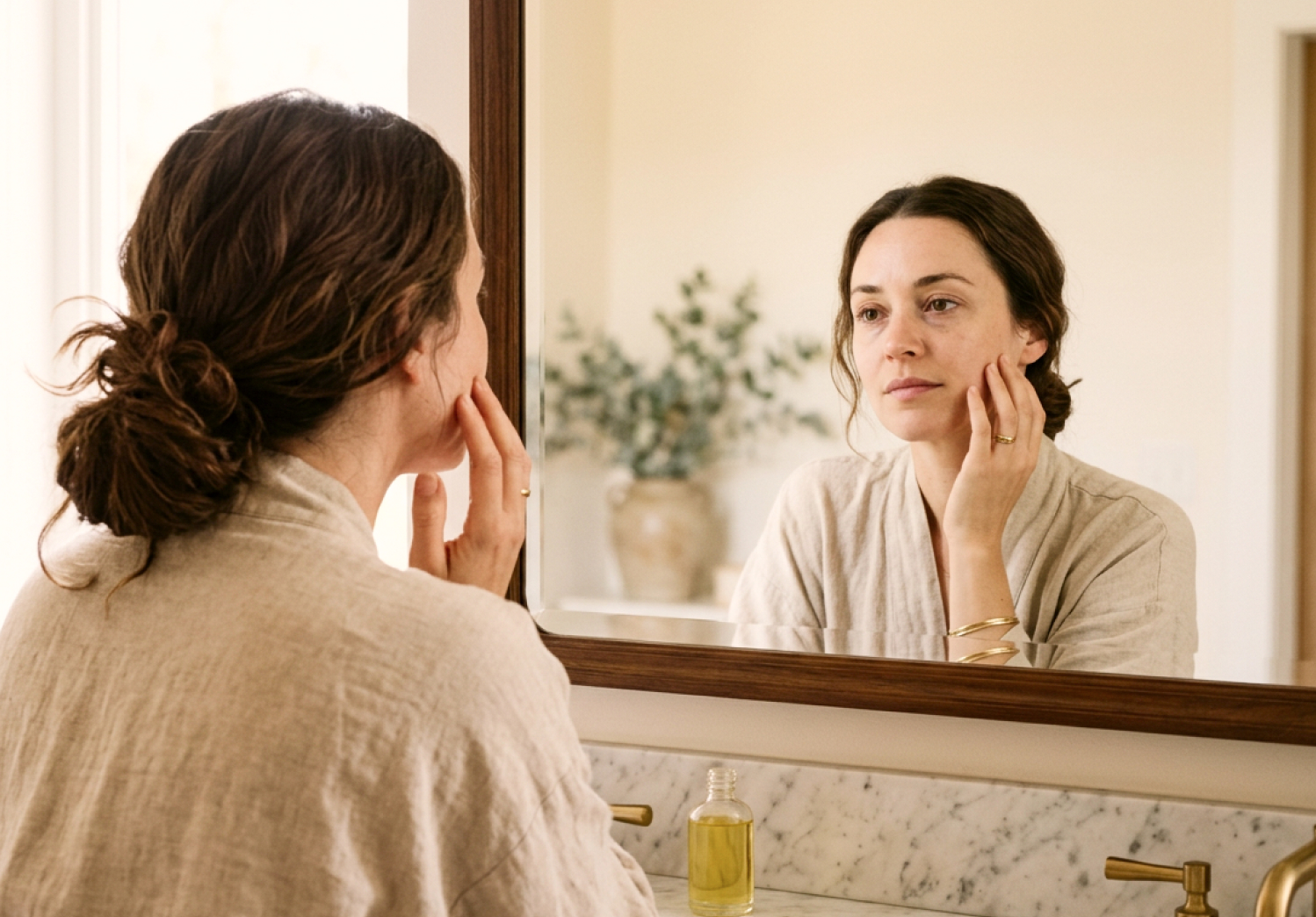
You slept eight hours. You drank your water. You did the routine. And you still walked past a mirror and thought: why do I look so exhausted?
It’s one of the most common frustrations women bring into the studio. They know they’re not tired. They feel rested. But their face isn’t reflecting that, and no amount of concealer or eye cream seems to close the gap between how they feel and how they look.
The reason is that looking tired and being tired are not the same thing. A tired-looking face is not always caused by lack of sleep. It’s caused by a set of conditions in the muscles, fluid systems, circulation, and tissue of the face that can exist completely independently of how well you slept last night.
Understanding what those conditions are changes the approach from covering them up to actually resolving them.
What Creates the Tired Face
A face that reads as tired has a specific set of visual characteristics. Puffiness around the eyes and along the jaw. A dull, flat complexion without brightness or warmth. Lines that appear deeper than usual. A heaviness in the expression — the brow sitting low, the mouth pulled downward, the overall impression one of weight rather than lightness.
These characteristics can all be present in a well-rested person because they’re not driven by fatigue. They’re driven by what’s happening in the tissue underneath.
These characteristics can all be present in a well-rested person because they’re not driven by fatigue. They’re driven by what’s happening in the tissue underneath.
Chronic muscle tension
The muscles of the face hold tension the same way the shoulders do — quietly, persistently, and often without any awareness that it’s happening. The jaw clenches during the day and grinds at night. The forehead contracts during screen time and concentration. The muscles around the eyes tighten from squinting. The muscles around the mouth brace during stress.
When these muscles stay partially contracted for weeks and months, the face takes on a held quality. The brow looks heavy. The expression appears stern or guarded. The features seem pulled inward. None of this has anything to do with sleep. It has everything to do with accumulated muscular holding that never fully releases.
When these muscles stay partially contracted for weeks and months, the face takes on a held quality. The brow looks heavy. The expression appears stern or guarded. The features seem pulled inward. None of this has anything to do with sleep. It has everything to do with accumulated muscular holding that never fully releases.
Sluggish lymphatic flow
The lymphatic system in the face has no pump. It depends on muscle movement, gravity, and external help to keep fluid moving through its vessels. When the system is sluggish — from stress, inactivity, dehydration, or tension that compresses the pathways — fluid accumulates in the face. Under the eyes. Along the jaw. In the cheeks.
This puffiness creates a soft, waterlogged quality that makes the face look heavier than it is. It blurs the natural contours. It adds volume in places that don’t belong. And it persists regardless of how much sleep you got, because it’s a drainage issue, not a fatigue issue.
This puffiness creates a soft, waterlogged quality that makes the face look heavier than it is. It blurs the natural contours. It adds volume in places that don’t belong. And it persists regardless of how much sleep you got, because it’s a drainage issue, not a fatigue issue.
Restricted circulation
When blood flow to the face is reduced — which happens readily when the neck and shoulders are tight, when the body is under chronic stress, or when posture compresses the circulatory pathways — the skin receives less oxygen and fewer nutrients. Cell turnover slows. Waste removal becomes less efficient. The complexion loses its warmth and brightness.
That grayish, flat quality that makes a face look tired even after a full night of sleep is often a circulation problem. The skin isn’t damaged. It’s underfed. And no serum applied to the surface can push blood through tissue the way physical stimulation can.
That grayish, flat quality that makes a face look tired even after a full night of sleep is often a circulation problem. The skin isn’t damaged. It’s underfed. And no serum applied to the surface can push blood through tissue the way physical stimulation can.
A nervous system that hasn’t truly rested
Sleep and nervous system rest are not the same thing. It’s possible to sleep eight hours and wake up with a body that is still running on cortisol from the day before. Stress that wasn’t processed. Tension that wasn’t released. Emotional weight that was carried into bed and carried right back out again.
When the nervous system stays in a low-level activated state even during sleep, the face shows it. The muscles don’t fully relax overnight. The skin’s repair processes don’t reach their full potential. The inflammatory baseline stays slightly elevated. And in the morning, the face looks like it’s still bracing for something — because, in a sense, it is.
When the nervous system stays in a low-level activated state even during sleep, the face shows it. The muscles don’t fully relax overnight. The skin’s repair processes don’t reach their full potential. The inflammatory baseline stays slightly elevated. And in the morning, the face looks like it’s still bracing for something — because, in a sense, it is.
Dehydration below the surface
Skin can be adequately moisturized on the surface and still be dehydrated at a deeper level. When the body is chronically stressed or the barrier has been subtly compromised, the skin’s ability to retain water in its deeper layers decreases. The result is skin that looks flat, thin, and lackluster even when it’s been moisturized. It photographs poorly. It catches light differently. And it contributes to the overall impression of tiredness because well-hydrated skin has a plumpness and luminosity that dehydrated skin simply does not.
Why Products Alone Don’t Resolve It
If the tired-looking face were purely a surface issue, a good skincare routine would solve it. And a good routine does help — it hydrates, it protects, it nourishes the outer layers. But the conditions creating the tired appearance — muscle tension, stagnant fluid, restricted circulation, a nervous system that won’t settle — are all subsurface problems that products are not designed to reach.
This is why women who do everything right topically can still look exhausted. The products are doing their job. But the systems underneath are not doing theirs.
This is why women who do everything right topically can still look exhausted. The products are doing their job. But the systems underneath are not doing theirs.
What Changes When the Underlying Conditions Are Addressed
When the muscles of the face release their chronic holding, the expression opens. The brow lifts. The jaw softens. The features settle into a resting position that looks relaxed rather than guarded. People describe it as looking “like you just came back from vacation” — not because anything was added, but because something was removed.
When lymphatic fluid starts moving, the puffiness resolves. The face looks lighter. The contours become more defined. The under-eye area flattens. The difference can be visible within a single session because the fluid was there, ready to move — it just needed help.
When circulation improves, the complexion warms. Brightness returns. The skin looks alive rather than flat. Cell turnover receives the oxygen and nutrients it needs to function properly. The dullness lifts.
When the nervous system genuinely settles — not just during sleep but during waking rest — the face reflects a calm that eight hours in bed alone does not always provide. The tension softens. The expression opens. The whole face looks like it has finally, truly rested.
These shifts don’t require dramatic intervention. They require someone who can work with the tissue directly — the muscles, the fluid, the circulation — in a sustained, skilled, and intentional way. That is what professional facial massage does.
What a Session Does for the “Tired Face”
At Juventas Studio, every session begins with the chest, shoulders, neck, and scalp. For women whose face looks tired despite adequate sleep, this opening work is especially significant. Tension in these areas directly restricts the blood flow and lymphatic drainage that serve the face. Releasing them creates an immediate shift in how the facial tissue responds.
The session then moves through the full face, addressing the areas that contribute most to the tired appearance — the jaw, the forehead, the under-eyes, the cheeks. By the end, the face typically looks noticeably different. Not made up. Not filtered. Just rested in a way that reflects what the body actually needed rather than what a product could provide.
Over consistent sessions, the tired-face pattern diminishes. The muscles hold less tension between appointments. The lymphatic system stays more active. Circulation maintains a healthier baseline. And the face starts looking rested as a default rather than only on its best days.
The Face You See Should Match How You Feel
If you’re doing the work — sleeping, hydrating, caring for your skin — and the mirror still doesn’t reflect the effort, the issue probably isn’t at the surface. It’s underneath. And addressing it doesn’t require adding more products or more steps. It requires a different kind of attention — one that reaches the muscles, the fluid, the circulation, and the nervous system that shape how your face appears to the world.
That kind of attention is what every session at Juventas Studio is built around. Women from Murrieta, Temecula, Menifee, Wildomar, and the surrounding area come in looking tired and leave looking like themselves. The rested version. The one that was there all along.
Book Now
That kind of attention is what every session at Juventas Studio is built around. Women from Murrieta, Temecula, Menifee, Wildomar, and the surrounding area come in looking tired and leave looking like themselves. The rested version. The one that was there all along.
Book Now
FAQ Section
I sleep well but still look tired. Is that normal?
Very common. The tired appearance is often caused by muscle tension, lymphatic stagnation, restricted circulation, and nervous system activation that exist independently of sleep. These conditions accumulate from stress, posture, screen time, and daily holding patterns. They create a face that looks fatigued even when the body has rested.
How quickly will my face look more rested after a session?
Most clients see a visible difference after a single session. Puffiness reduces, the complexion brightens, and the expression opens. Over a series of consistent appointments, the improvements hold longer and the tired-face pattern becomes less pronounced between visits.
Is this the same as just needing more sleep?
Not necessarily. Sleep is important, but the factors creating a tired-looking face are often structural — muscle tension, fluid accumulation, circulatory sluggishness — and these can persist even with excellent sleep. Professional facial massage addresses these underlying conditions directly, which is why it produces visible changes that additional sleep alone may not.
Will my skincare products work better after facial massage?
Many clients report that their products seem more effective after consistent sessions. This makes sense — when circulation improves and the skin barrier is better supported, the skin absorbs and responds to topical products more efficiently.
How often should I come in?
Every one to two weeks provides the most consistent improvement for women whose primary concern is looking tired. The tension and fluid patterns that create the tired appearance tend to rebuild during the week, so regular sessions keep them in check and allow the face to maintain a rested baseline.